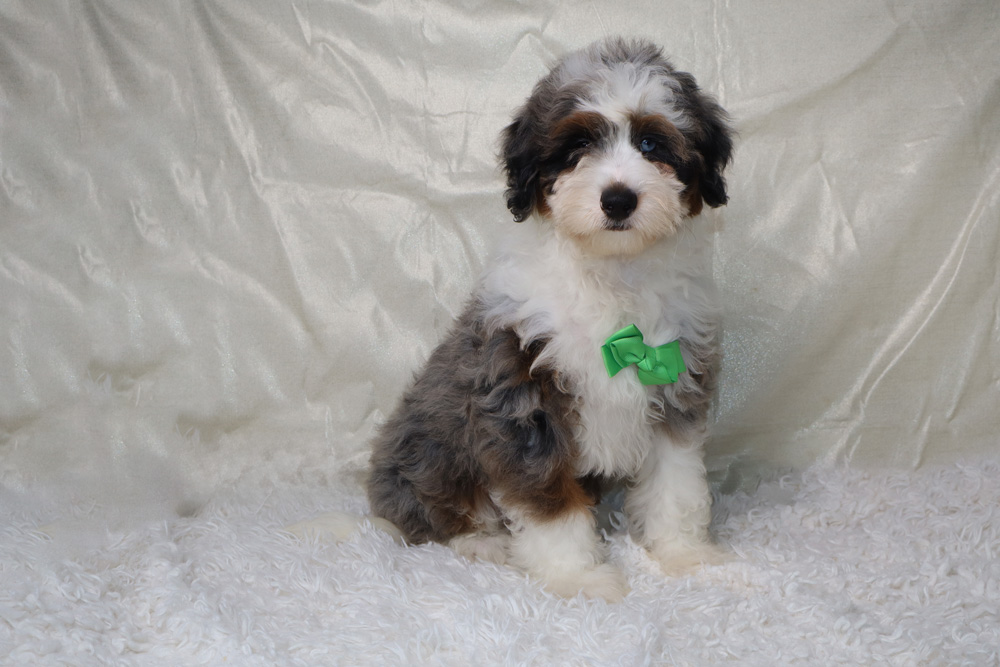
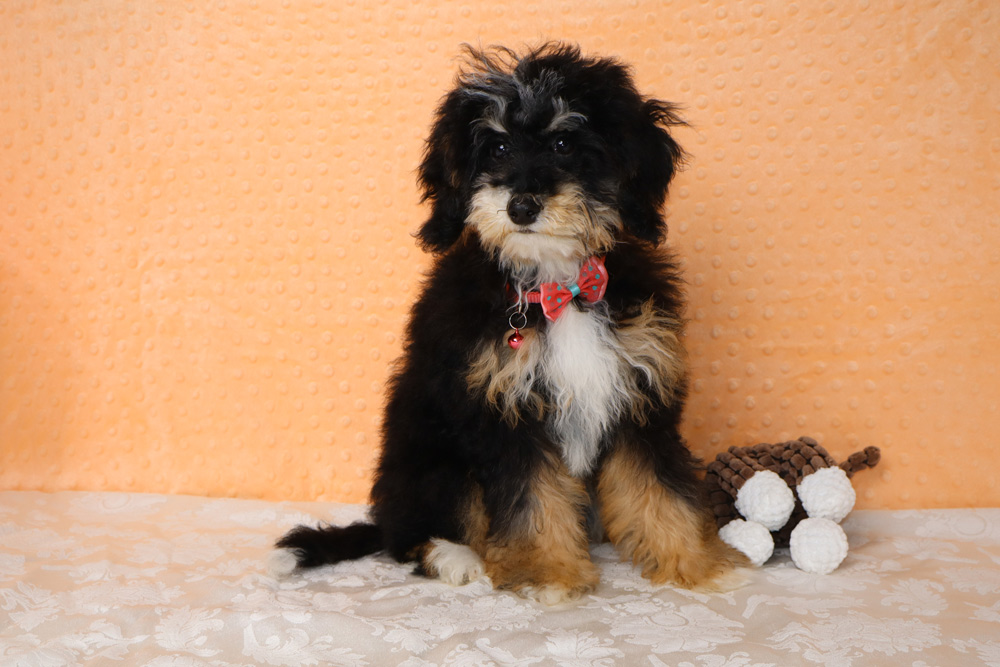
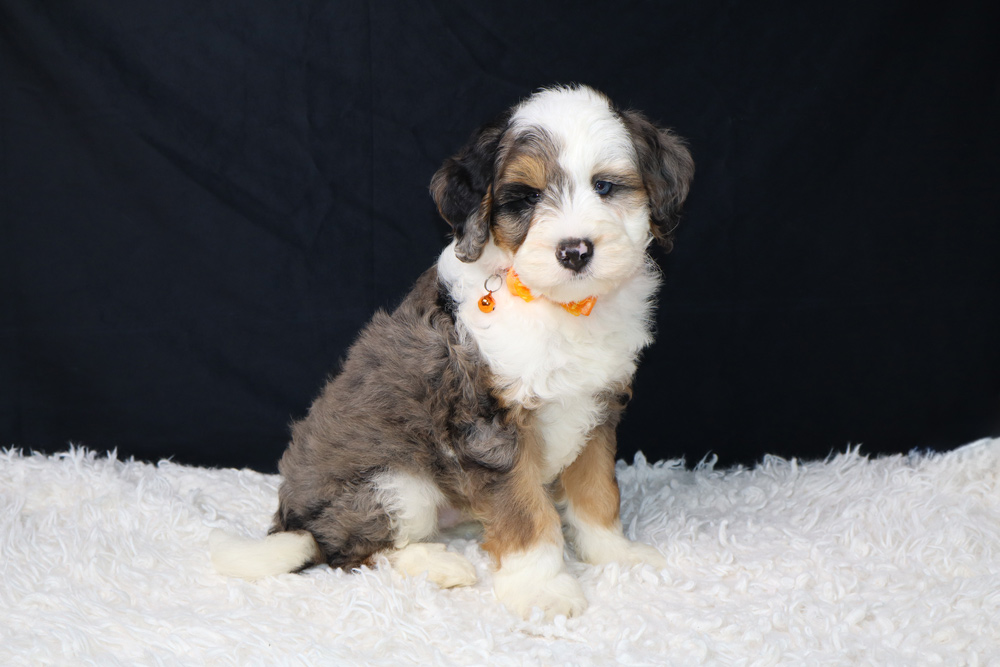
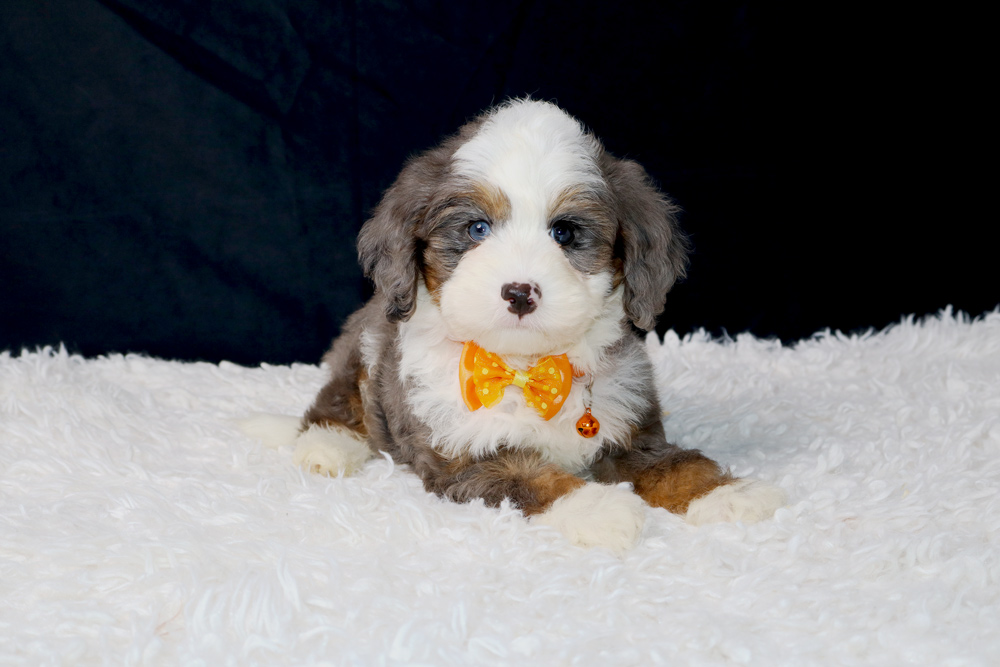
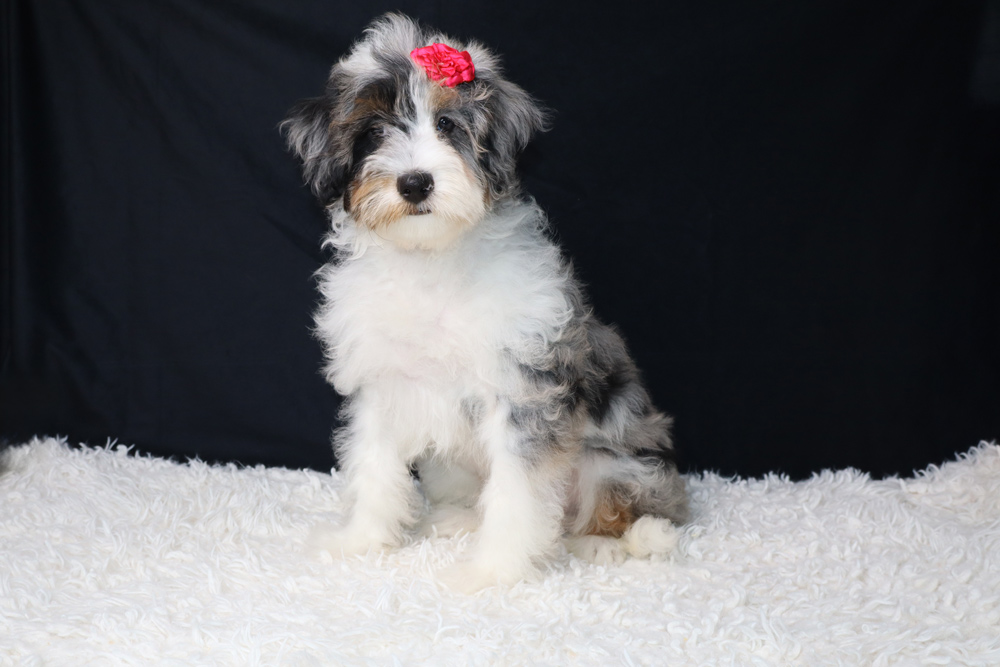
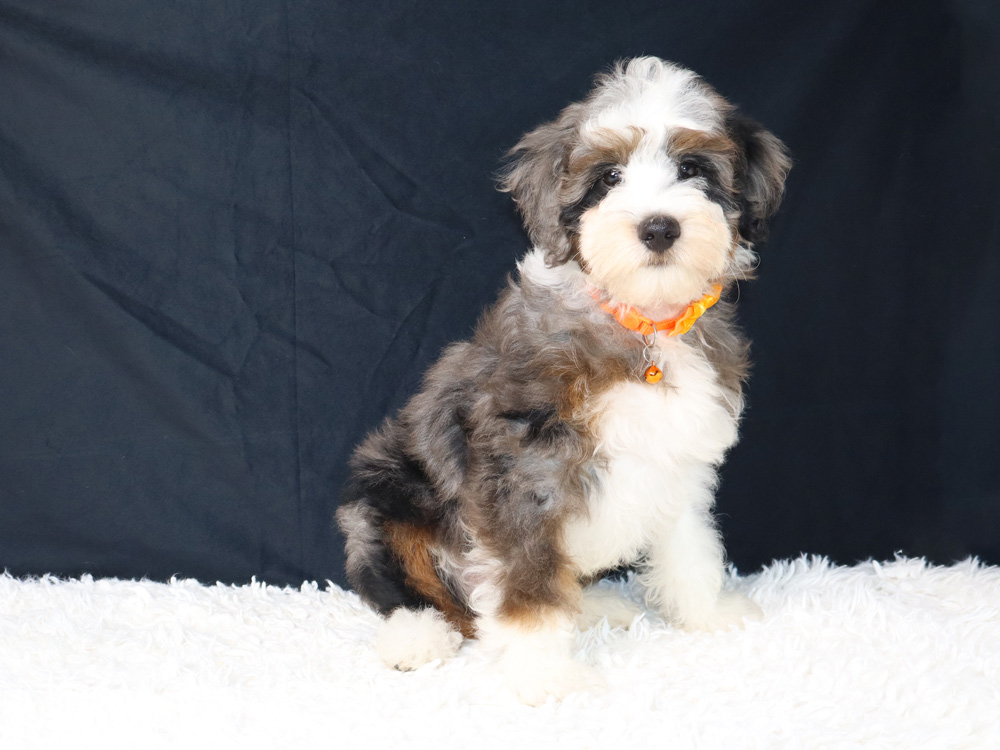
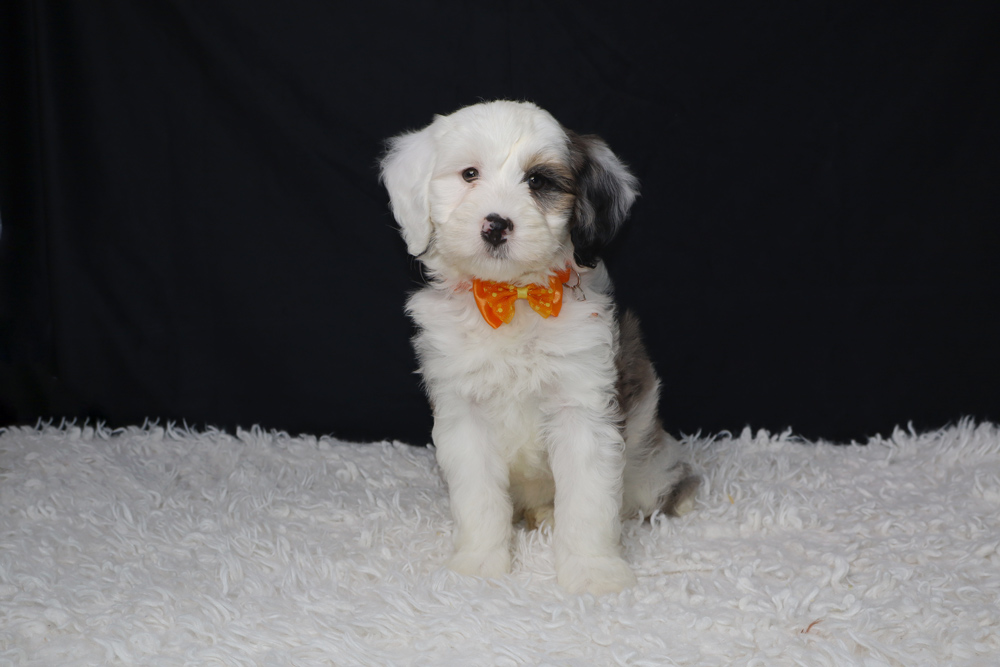
Micro Bernedoodle puppies at Blue Diamond start life differently than most. A puppy trainer evaluates each dog individually, writes a full personality profile, and matches each pup to the right family based on documented temperament data. F1b generation only. Puppies ready to go home starting at $3,495.
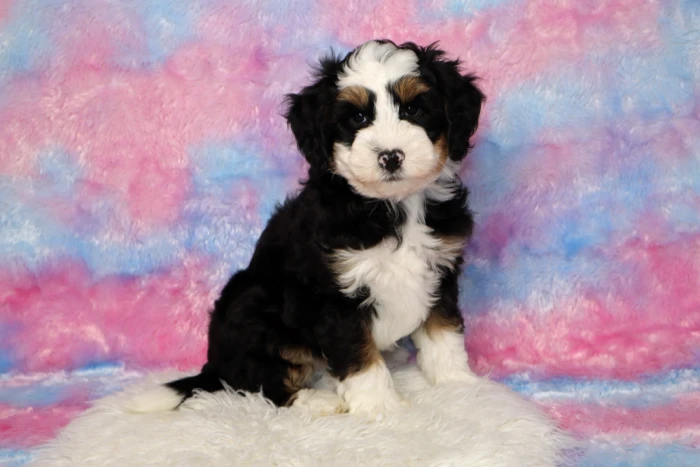
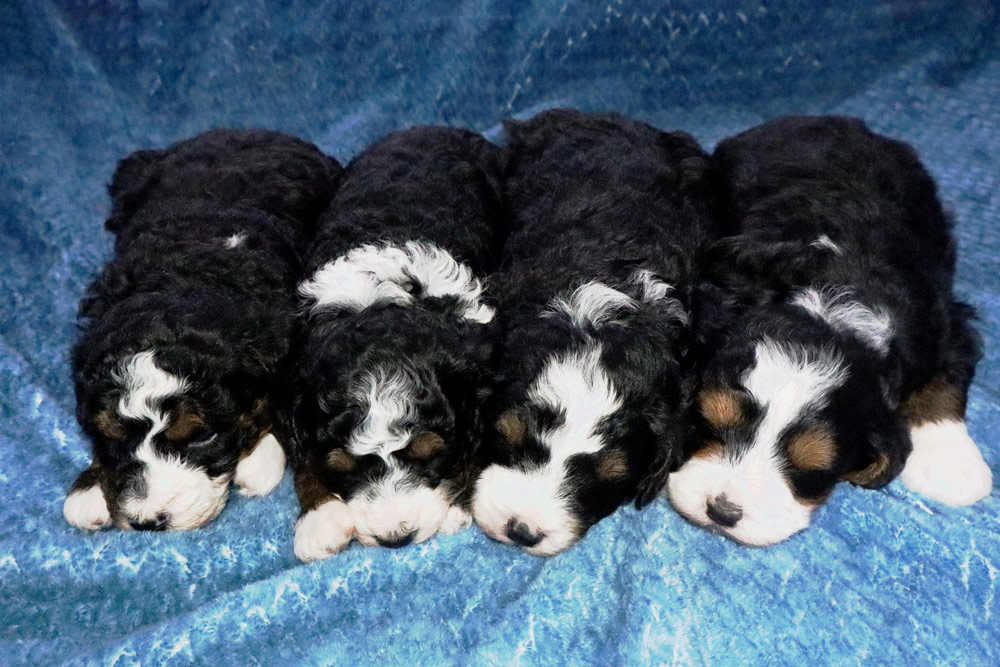
10/07/2026
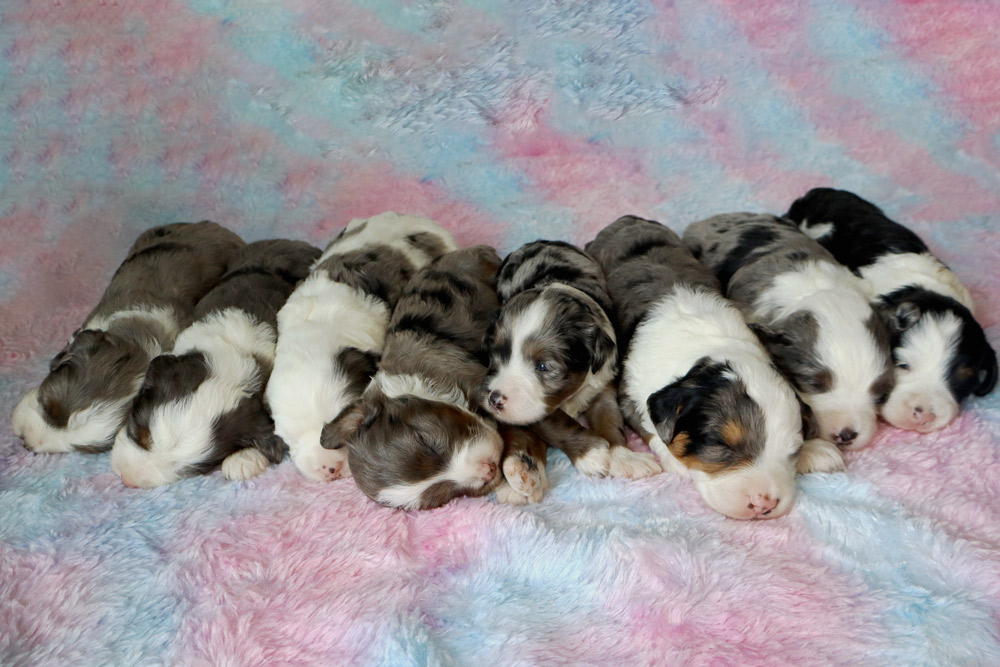
09/14/2026
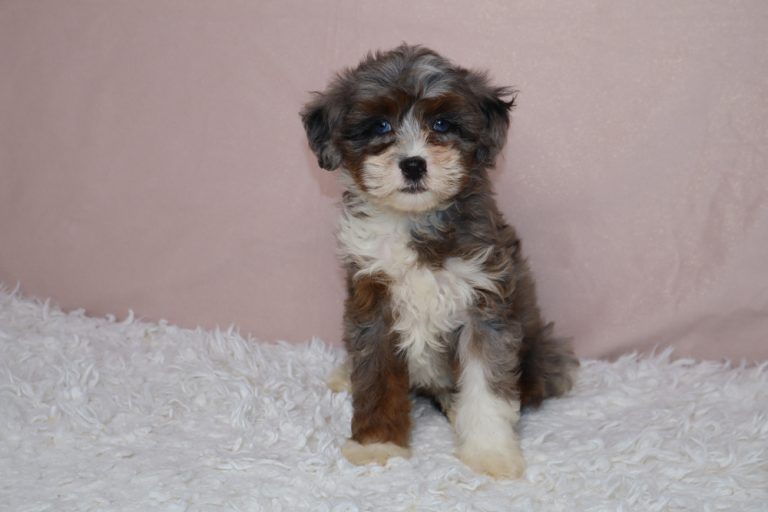
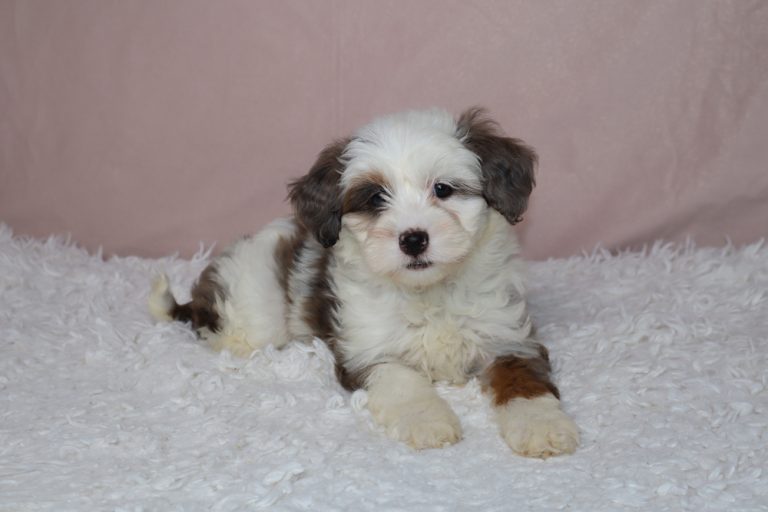
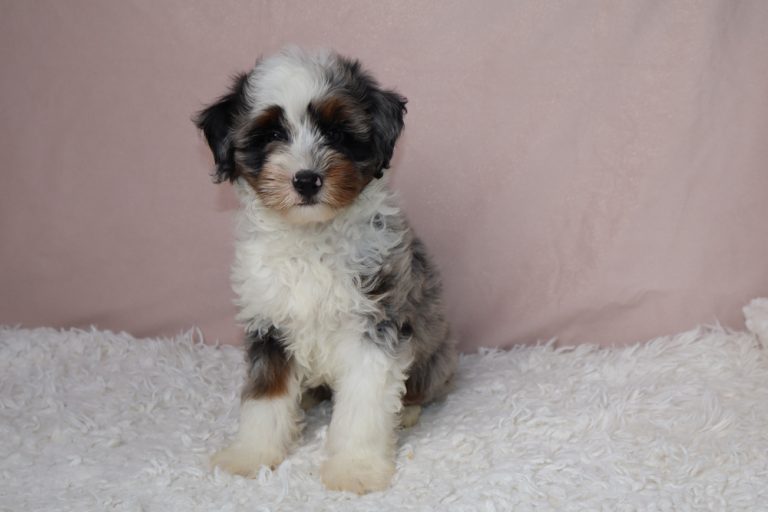
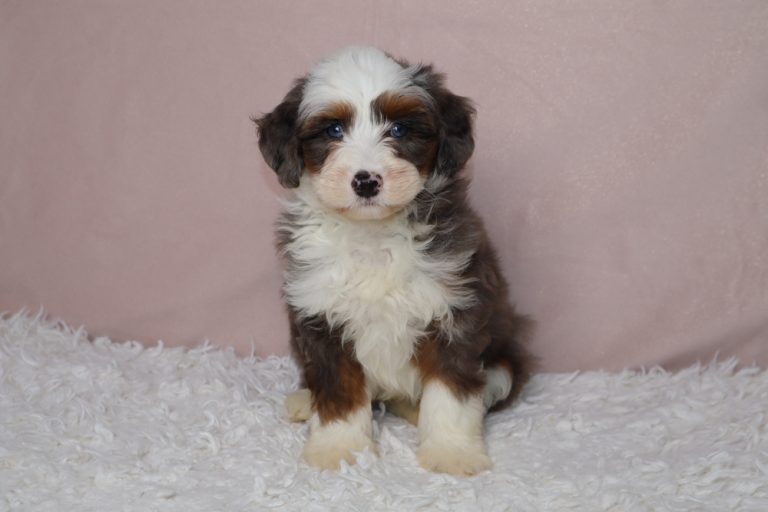
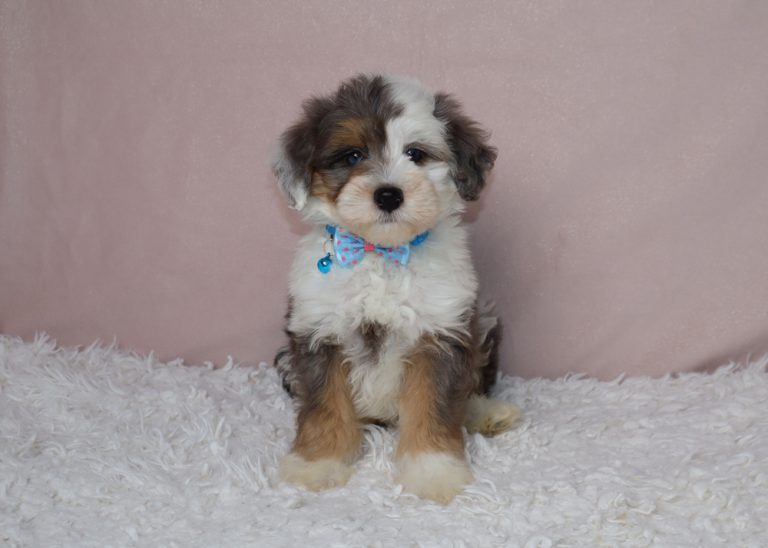
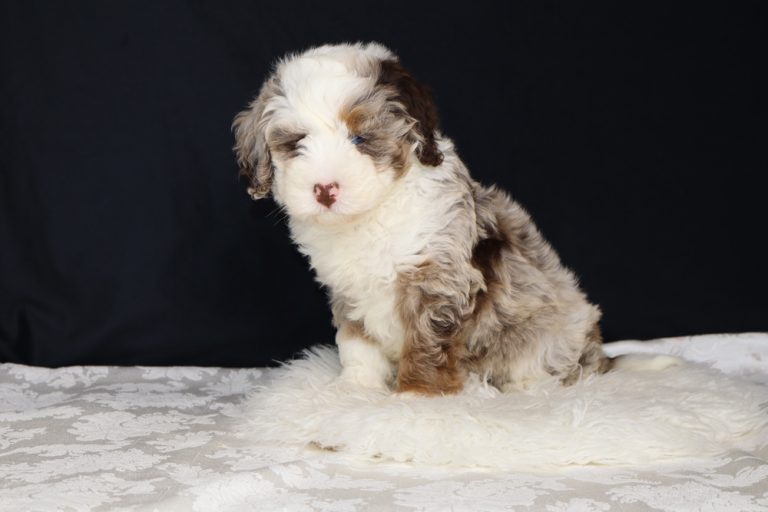
Blue Diamond breeds F1b Micro Bernedoodles, meaning a first-generation Bernedoodle is bred back to a Miniature Poodle. That pairing produces a dog that is approximately 75% Poodle and 25% Bernese Mountain Dog. Puppies end up with a wavy to curly, low-shedding coat and an adult weight that stays well under 25 pounds.
| Adult weight | 15 to 25 lbs |
| Height at shoulder | 12 to 17 inches |
| Lifespan | 14 to 18 years |
| Generation at Blue Diamond | F1b (75% Poodle / 25% Bernese) |
| Shedding | Minimal to none |
| Coat | Wavy to curly |
| Hypoallergenic | Yes, low dander |
The breed was developed to create a smaller version of the Bernedoodle. Their micro size works out better for apartments, smaller homes, and everyday life. Breeders also wanted to retain the calm, affectionate personality that made the Bernedoodle so popular. They’re small enough to travel easily, gentle enough for homes with kids, and calm enough to settle into a quiet household just as naturally as an active one.
Micro Bernedoodles fall in the medium-energy range. They’re not couch potatoes, but they won’t wear a hole in your carpet either. Thirty to forty-five minutes of daily activity keeps most adults content. A walk in the morning, some playtime in the afternoon, and a spot on the couch in the evening covers it.
F1b stands for first-generation backcross. An F1b Micro Bernedoodle has one F1 Bernedoodle parent and one Miniature Poodle parent, which shifts the genetics to approximately 75% Poodle and 25% Bernese Mountain Dog. Blue Diamond breeds F1b exclusively for the Micro size.
The breeding classification matters because it predicts the traits your puppy is likely to carry. F1 Bernedoodles mean the puppy is 50% Bernese and 50% Poodle. Puppies show more variation in coat type and adult size from one puppy to the next within the same litter. The F1b backcross tightens both. Coat texture tends to be curlier and lower-shedding. The puppies’ adult size becomes more predictable within a litter because the second Poodle parent adds another layer of genetic influence toward the microsize.
What doesn’t change much is the temperament. The Bernese Mountain Dog’s calm, patient nature carries through even at 25% of the genetic makeup. Blue Diamond families consistently describe their Micro Bernedoodles as gentle and deeply bonded. That’s the opposite of the high-strung behavior that sometimes defines other small breeds. You get the Poodle’s intelligence and low-shedding coat paired with enough Bernese temperament to keep the dog easygoing, adaptable, and genuinely good with people.
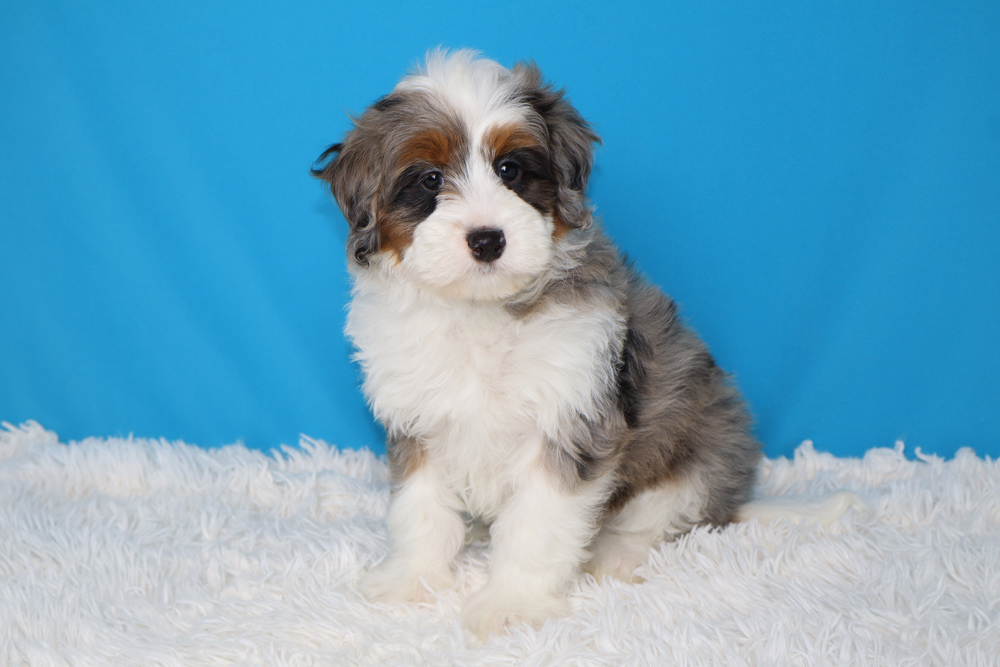
Micro Bernedoodles are affectionate, perceptive, and deeply attached to their families. Most settle into new homes within days and establish a clear preference for being wherever their person is. The velcro-dog description gets used a lot by Blue Diamond families after the first few weeks with their puppy, and it’s accurate. Micro Bernedoodles don’t do well left alone for long stretches, and households with very long work hours and no dog sitter should factor that in before committing.
Males tend to be more openly affectionate. They push for physical closeness and are usually the ones climbing into laps uninvited. Females lean slightly more independent but stay highly social and devoted to their families. Both are gentle with children and easy-going around other pets. This is where Kimberly’s individual temperament reports tell families far more than the gender label alone does.
With strangers, Micro Bernedoodles are friendly but measured. They warm up quickly rather than retreating, which makes them well-suited for households with regular visitors. Give a new person five minutes and most will be sniffing shoes and asking for attention. They’re not watchdogs and won’t bark at every noise.
Training is a real strength of the breed. The F1b generation carries strong Poodle intelligence, and these dogs pick up commands quickly with positive reinforcement. Short training sessions beat long ones. Ten to fifteen minutes twice a day outperforms a single forty-minute block, and keeping drills varied holds attention far better than repeating the same command until the dog tunes out. Start the first session on day one at home.
Adult Micro Bernedoodles at Blue Diamond run around 15 pounds and 25 pounds and stand 12 to 17 inches at the shoulder. Males tend to land toward the higher end of that range. The actual size of a specific puppy depends on both parent dogs’ weights, and Blue Diamond provides a size estimate for each litter based on the dam and sire.
| Age | Estimated weight range |
|---|---|
| 8 weeks (go-home age) | 4 to 7 lbs |
| 3 months | 7 to 10 lbs |
| 6 months | 10 to 18 lbs |
| 12 months | 14 to 23 lbs |
| Full grown (10 to 14 months) | 15 to 25 lbs |
Micro Bernedoodles reach adult size faster than the larger Bernedoodle sizes. Most hit full height and weight between 10 and 14 months, compared to 18 to 24 months for Standard Bernedoodles. A 24-inch crate fits most adults well and won’t need replacing as the dog fills out.
Blue Diamond raises Bernedoodles across three sizes. Standard Bernedoodles run 60 to 90 pounds. Mini Bernedoodles weigh between 35 and 55 pounds. Micro Bernedoodles stay under 25 pounds. If you’re sitting between sizes and want a direct comparison of energy levels, grooming time, and space requirements, the Standard and Mini breed pages walk through each in full detail.
Coat texture in a Micro Bernedoodle runs wavy to curly. The F1b backcross pushes strongly toward the Poodle’s curl pattern, which is a big part of why these dogs shed so little. Loose hair gets caught in the surrounding coat rather than landing on furniture and clothes. Both wavy and curly coats need consistent brushing to prevent matting. Curly coats in particular will tighten into dense knots without regular maintenance, and a matted coat at the grooming table means the groomer shaves rather than trims.
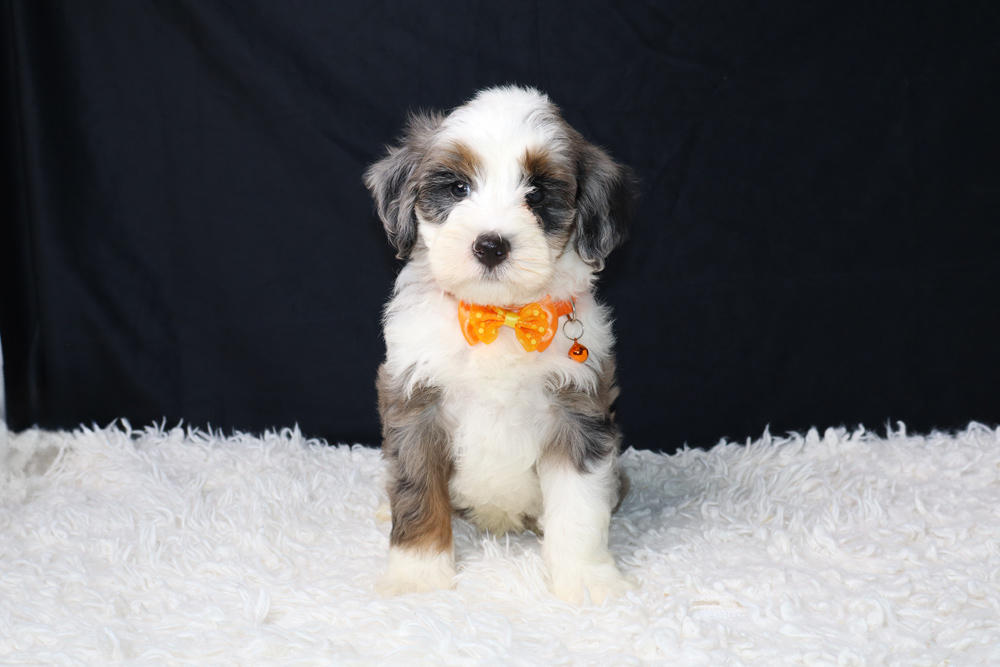
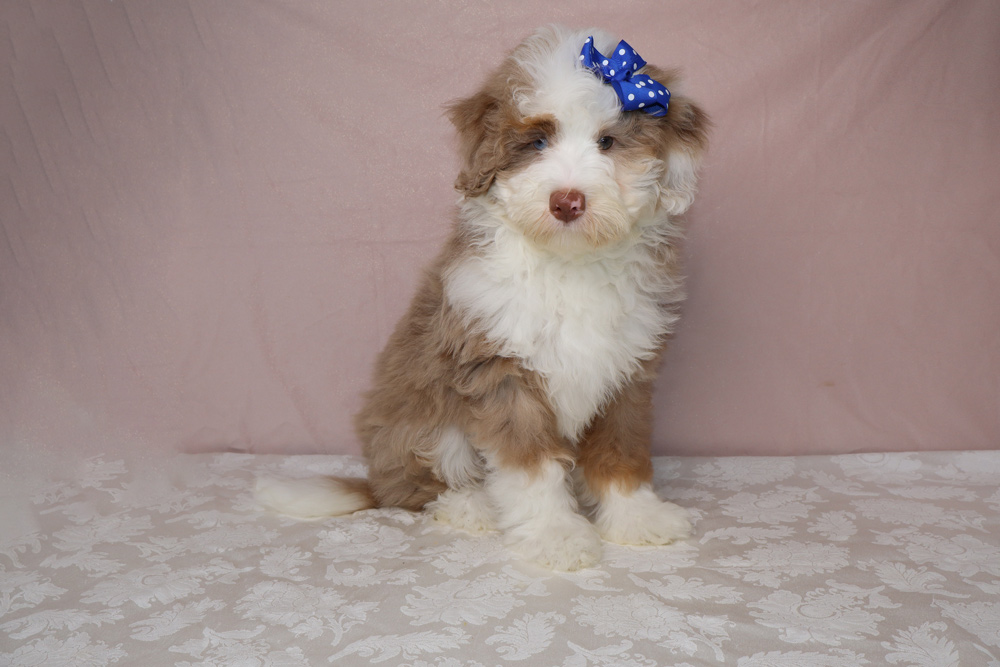
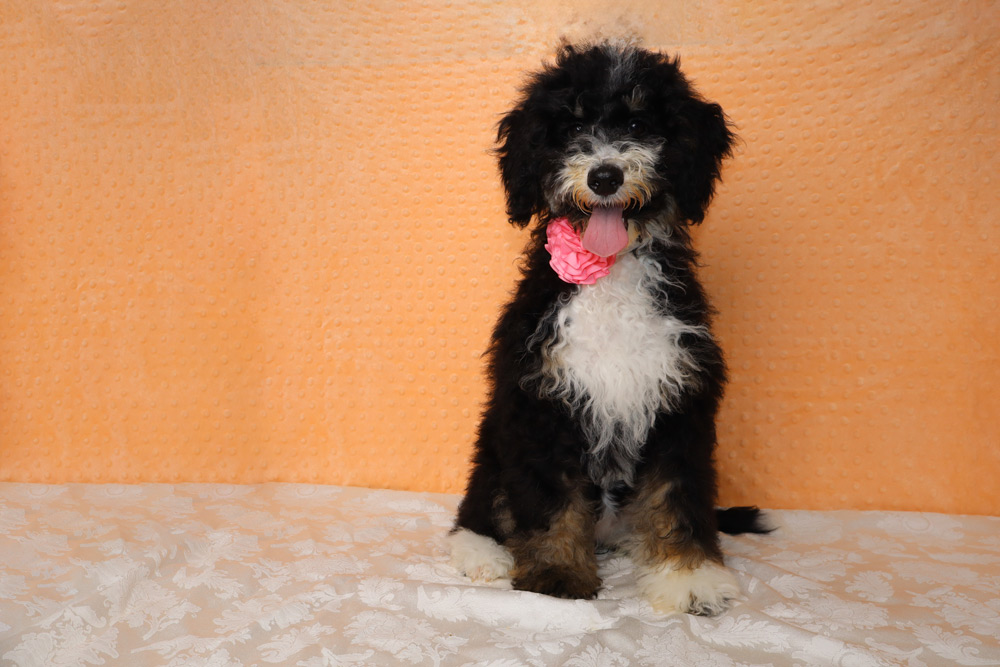
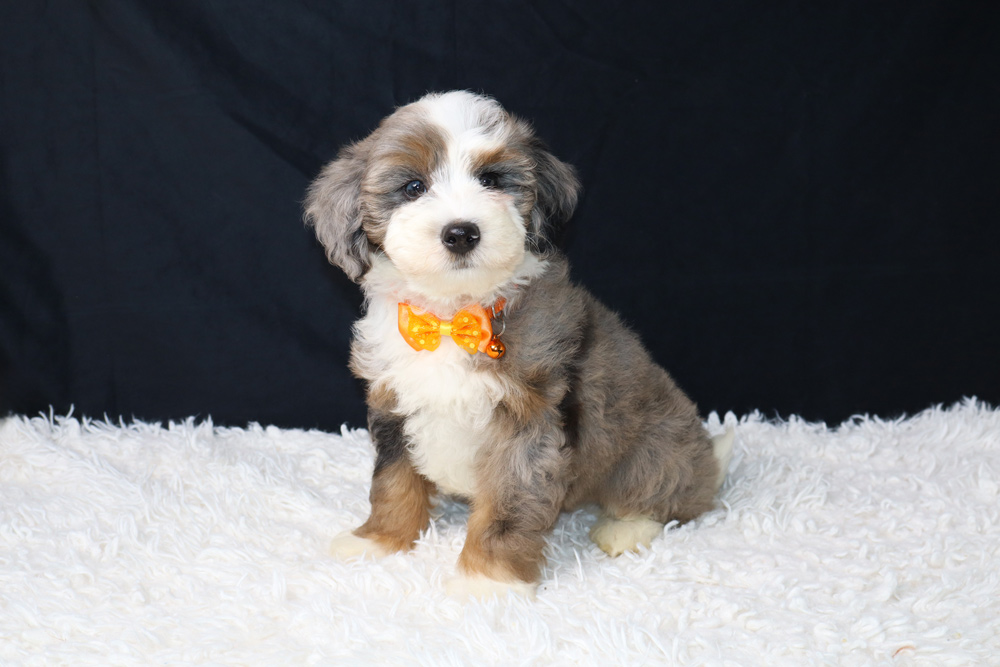
Blue Diamond Micro Bernedoodles come in several color patterns:
Full descriptions and photos go live on the website alongside each puppy’s listing at 7 weeks old.
All Blue Diamond Micro Bernedoodle coats require regular grooming. A 6 to 8 week grooming schedule prevents matting. Daily brushing between appointments keeps the coat in good condition and makes each grooming visit faster and less stressful for the dog.
Micro Bernedoodles benefit from hybrid vigor, the tendency of first-generation crosses to be healthier than either purebred parent on its own. That’s a large part of why Micro Bernedoodles often live 14 to 18 years, well above the 7 to 10-year average of a purebred Bernese Mountain Dog. Small breeds still carry specific health risks that responsible breeding addresses directly through parent health testing.
Patellar luxation is when the kneecap slips from its normal position. This is the primary orthopedic concern in smaller breed dogs. Micro Bernedoodles carry that susceptibility from the Miniature Poodle side of their genetics. Mild cases cause occasional lameness after vigorous activity. Severe cases require surgical correction. Keeping a Micro Bernedoodle at a healthy body weight reduces stress on the joint and lowers the likelihood of severe cases developing over time. Genetic screening of parent dogs addresses the inherited risk before it reaches the puppy.
Progressive retinal atrophy is a recognized inherited eye condition found in both Poodles and Bernese Mountain Dogs. It causes gradual vision loss and eventually leads to blindness. There is no treatment, but genetic testing of parent dogs before pairing identifies carriers and prevents the production of affected puppies. Every one of Blue Diamonds breeding dogs are tested for PRA.
Small breeds have more teeth in a proportionally smaller jaw, which can cause crowding and increase the risk of periodontal disease earlier than in larger breeds. Daily tooth brushing slows plaque buildup. Dental chews between brushings help. A veterinary dental cleaning on the schedule your vet recommends catches problems before they become painful or require extractions.
Hip dysplasia is less common in small breeds than in large ones, but it remains a risk worth testing for given that both Bernese Mountain Dogs and Poodles carry susceptibility. Health testing of parent dogs before pairing is the primary tool breeders use to reduce the odds of passing it to the next generation. Every buyer receives a vet health certificate for their puppy.
Every Blue Diamond puppy goes home with a veterinary health certificate, age appropriate vaccinations, a deworming record, and documentation of parent health testing. Blue Diamond’s health guarantee covers genetic health conditions for one year from the date of purchase.
Blue Diamond Micro Bernedoodle puppies don’t go through a standard whelping-box-to-go-home process. What happens between birth and 8 weeks determines how a puppy handles its first week in a new home. The months that follow depend on it too.
ENS starts at day 3 and runs through day 16. Each puppy receives five specific handling exercises once per day during this window: tactile stimulation, thermal stimulation, head-up positioning, head-down positioning, and supine positioning. The research behind ENS, originally developed for military working dogs, shows that mild stimulation during the early neurological development window produces dogs with stronger cardiovascular systems, improved stress tolerance, and greater adaptability to new environments. A Micro Bernedoodle that’s been through ENS handles its first car ride, first vet visit, and first week in a new home with noticeably more confidence than one that hasn’t.
Kimberly, Blue Diamond’s independent puppy trainer, evaluates every puppy at 7 weeks. She assesses each dog individually across multiple temperament dimensions, including energy level, response to handling, and reaction to new people and other dogs. She writes a full personality description for each puppy. That report goes live on the website alongside the puppy’s listing. Families choosing a Micro Bernedoodle from Blue Diamond don’t get a generic breed description. They get a profile of the specific dog they’re considering.
Between ENS and Kimberly’s evaluation, each puppy spends weeks being handled by multiple people, exposed to household sounds, moved through different environments, and socialized with other dogs. By go-home day, these aren’t puppies that have only ever seen the inside of one room.
Available puppies post on this page as soon as Kimberly completes temperament testing at 7 weeks. Sign up for the newsletter to get notified the moment a new litter goes live. Litters at $3,495 fill quickly once listings go up.
Puppies with a price listed are available now. Clicking Details on any listing opens Kimberly’s full temperament profile, covering the puppy’s energy level, how it responds to new people and other dogs, and what training approach she recommends for that specific puppy. Reserving a puppy requires a deposit. Klarna is available at checkout for families who want to split the purchase over time. Credit card payments are preferred for deposits. Cash or card for full payments.
Puppies go home at 8 weeks old. No puppy leaves before this age, regardless of family requests or scheduling preferences. This is because 8 weeks is the developmental window when puppies are ready to separate from their litters. They are also ready to build attachment to a new family without lasting stress. Eight weeks is the standard. No exceptions. Blue Diamond connects families beyond a reasonable driving distance with vetted transporters. These professionals coordinate the details of safely transporting our puppies to their forever homes. All puppies leave with a health certificate, full vaccination record and deworming documentation. They also receive Kimberly’s written temperament profile and any relevant parent health testing paperwork for that litter.
Adult Micro Bernedoodles do well with 30 to 45 minutes of activity daily. You can easily split this between a morning walk and an afternoon play session. Puppies need far less organized playtime and exercise than adults. A widely used guideline for small-breed puppies is 5 minutes of leash walking per month of age, twice per day, to protect developing joints during the growth phase. High-impact running and jumping should wait until the dog is at least 12 months old.
Mental stimulation counts as much as physical activity for this breed. Puzzle toys, short training sessions, and interactive play keep a Micro Bernedoodle’s mind engaged on days when a long walk isn’t possible.
Micro Bernedoodle coats need brushing three to four times per week at a minimum. Daily brushing is required. Utilizing a slicker brush and a metal comb are the two tools that work best. The brush loosens surface knots, and the comb gets through to the undercoat where mats start. Grooming on a 6 to 8-week schedule keeps the dogs fur at a manageable length and prevents the dense, tight tangles. Groomers will shave a dog’s coat that produces tight tangles. Introduce brushing your puppy’s coat during the first week at home. Puppies that learn to stay calm during handling early tolerate grooming far better as adults.
Ear cleaning is important in small, floppy-eared breeds. Moisture trapped in the ear canal creates conditions for infection. Checking your puppy’s ears weekly is necessary. Ask your vet for an approved solution when needed.
Micro Bernedoodles should be fed a high-quality small-breed dog food. Small-breed puppy formulas support healthy growth and appropriate calorie intake to help them stay under 25 pounds. After 12 months, you can move the puppy to a small-breed adult formula. Two meals per day are recommended for adults. A 20-pound adult Micro Bernedoodle eats approximately 3/4 cup up to 1 cup of dry food daily. This depends on the formula’s calorie formulation. Check the feeding guide for your specific food and adjust based on the overall weight and shape of your pet. Overfeeding a small dog can create stress on joints and organs.
Micro Bernedoodles respond well to short, positive training sessions. Training sessions should start on the first day at home. Poodle intelligence in the F1b cross means these dogs learn quickly and get bored quickly. Ensure your training sessions do not consist of the same drill repeated too many times in a single session. Ten to fifteen minutes twice a day with varied drills builds a well-trained dog faster than long, infrequent sessions. Consistency matters more than intensity.
Posted on Google
 Mel T.September 8, 2026
 Finn ( Asher ) is a F1 B cavapoo. ( zero shedding he can be in my lap in all black and get off me with two dog hairs on my clothes ) He’s right at three months old. He has been a complete joy. He is super smart. I take him everywhere. He is the talk of the town. So many people will come up to us out in public. I have actually referred this breeder multiple times to people. There are so many scams out there. Also, the delivery process was first class. I knew about this breeder because a friend of mine had gotten a dog from them top-notch.Posted on Google
 Richard SermonsSeptember 5, 2026My wife and I have never ordered a dog online before so we were a little worried about the process. Blue Diamond Family Pups made the process very easy, they answered all our questions and kept us up to date with the delivery. They were very professional and We would highly recommend them for you ur puppy purchase. We received Roper on Thursday morning and a day and a half later he has settled in here in his new Louisiana back yard. Thank You Blue Diamond Family Pups.Posted on Google
 JohnSeptember 4, 2026Very Professional and clean beautiful puppysPosted on Google
 Carolina AcevesAugust 28, 2026So happy with our experience finding our Bernese Mountain Dog. We got our puppy in March and had a seamless experience. He is a happy, loving healthy puppy.Posted on Google
 Kiara PeñaAugust 16, 2026We had a wonderful experience with Blue Family Diamond Pups (Dean and Heidi)! We found them through Reddit threads and Facebook groups when searching best bernedoodle breeders with great reviews. They responded to our email and text inquiries within hours and answered all of our questions. We purchased a 9-week-old F1 Standard Bernedoodle and had him transported from Ohio to Miami. On their website they share videos of their 10-acre farm and facility, a tour of the third-party pet transport vehicle, and provided all of his documents and paperwork. We’re so happy with our puppy and would absolutely recommend Blue Family Diamond Pups! 🐶❤️Posted on Google
 Erin ScarpaceJuly 18, 2026we got spirit from you in November. She was3 months and a micro bernedoodle. She has been amazing. Her demeanor is so great. So many people have asked about your company and the breed because of her. Her colorings are amazing and everyone comments on it. She has been the sweetest best pup for our family. I hope more families find you all. Thanks again for an amazing dog.Posted on Google
 Kim CassettiJune 17, 2026We are so happy with Blue Diamond Family Pups! They were so responsive and helpful with all of my questions. We had our wonderful puppy shipped from Ohio to California. It all worked out so well! Incredibly grateful for Blue Diamond !!! Highly recommend!!!Posted on Google
 Richard ArthurMay 19, 2026There are no signs or markings identifying Blur Diamond, but Google maps got is to the front door.Posted on Google
 Justin EnnisMay 7, 2026We recently got a mini Bernedoodle named Drake from Blue Diamond Family Pups and had a great experience. We were nervous about buying a dog online and having him shipped, but the positive reviews gave us confidence — and it worked out perfectly. Drake has an incredible temperament, is great with our kids, and has been an awesome addition to our family. Highly recommend!Posted on Google
 Katherine WaltenMay 5, 2026After being scammed prior to finding Blue Diamond Family Pups, we cannot praise these folks enough. They worked with us due to our previous experience with scammers and we are forever grateful. We have a story to share: We have a show in Vegas. Daphne came to the Vegas theater with us the first evening since we had a show the day she arrived. She did fabulously. During our show, she started crying and howling just a little bit, but the audience could hear her. So my husband told them about her arrival. They started chanting to bring her on stage, so she made her stage debute on the first day with us! The audience left and we were just standing at the entrance door talking when some audience members returned and my husband thought they came back to see him. They said, no, we want to see Daphne!! 😆 On night 1 she was totally adjusted and is already a theater doggy!! On day 2, she was in a café with us! She is amazing and very smart! The nurturing and care provided by Blue Diamond Family Pups prior to delivery is a testiment to the care they provide the pups. Daphne is well adjusted, happy, content and very easy to train. If you are considering a pup from this place, do it. You will be so glad you did.Posted on Google
 Jim BeallMay 2, 2026These people are the " real deal". They worked with me through my apprehension about buying on-line. I got the love my life( a female standard Bernedoodle). A Great dog, from good people, for a far price. They are worth your trust!Posted on Google
 Brooke RosierMay 1, 2026We adopted Dahlia (now named Birdie) and couldn’t be more in love. It was our first time getting a puppy online without meeting the breeder in person which was a bit nerve wracking but the team at Blue Diamond Puppies was very communicative and thorough, and clearly she had been well taken care of prior to her arrival. Our puppy is happy, healthy, gorgeous and very sweet. Thank you so much Blue Diamond!Posted on Google
 Pam BohannonMarch 23, 2026My puppy arrives on time and has been a great dog. The training at the Blue Diamond family Pups was a wonderful experience he is so friendly and social with other dogs and people. I highly recommend this organization to anyone who is looking.Posted on Google
 Jami McMullenMarch 21, 2026This is Autumn aka Auty! She is a Cavapoo. Her birth name was Patience. I have the most sweetest prettiest pup ever!! She is so funny and intelligent! Auty brings sooo much joy to our little family. The process of purchasing my pup was sooo easy! Everything went smoothly. Thank you Blue Diamond 💎Posted on Google
 Syl NisleyMarch 17, 2026Just a great place to buy your next puppy friend. Awesome peoplePosted on Google
 Sam TostiMarch 16, 2026Blue Diamond Family Pups exceeded every expectation. From helping us receive our puppy seamlessly, to letting us know what to expect and how to prepare, and most importantly for our new puppy. She arrived in perfect health, well groomed and taken care of, and her personality is spot on with her assessment. We are so lucky to have found them!Posted on Google
 Nicole ThammavongMarch 14, 2026Our cavapoo Peaches (formerly Bella) is over a year old now and has been an absolute dream! She loves to explore with her humans and never barks. She does well other dogs and people and has a perfect bill of health, also smart and easy to train. We had such an easy an experience with Blue Diamond and received regular updates about our baby before she arrived. Highly recommend :)Posted on Google
 Aileen PerezJanuary 21, 2026Blue Diamond Family Pups is absolutely wonderful! Their puppies are beautiful, healthy, and truly amazing. They were incredibly knowledgeable, responsive, helpful, and kind throughout the entire process and were also very flexible. I couldn’t have asked for a better experience! We are so happy with our girl!!! Highly Recommend. 🐾♥️Posted on Google
 Paul HunterJanuary 16, 2026Everything about my experience with Blue Diamond Family Pups has been amazing!! Their website is great! Communication with the owners was perfect. I felt like Maverick had been well cared for. They gave me all the info I needed to start a great relationship with Maverick. Obviously Maverick The perfect puppy!Posted on Google
 Sam EshJanuary 12, 2026If you buy a puppy from Blue Diamond your buying a top notch healthy puppy, very very happy experience with blue diamond ! And the great service they offer as well !
Browse the litters posted above or sign up for the newsletter to get notified the moment new puppies become available. Blue Diamond Micro Bernedoodle litters fill quickly once Kimberly’s temperament reports go live.
Starting at $3,495. Reach Blue Diamond through the contact page with any questions before reserving.