Q:How does the climate in Seattle, WA affect a Standard Goldendoodle?
A:Rainy Pacific Northwest weather in big-city Seattle, WA shapes a Standard Goldendoodle's daily routine around managing wet weather. Annual rainfall around 37.8 inches means a towel at the entryway year-round, with coat wipes and paw checks becoming standard practice through the wet months. The wavy or curly coat manages the climate with regular brushing. Cool summers at July highs around 76 degrees stay comfortable for the breed. Mild winters at January highs near 49 degrees keep year-round city walks easy despite the rain. Families head to Magnuson Park Off-Leash Area at 7400 Sand Point Way NE, Seattle.
Q:What does a Standard Goldendoodle coat look like and how much grooming does it need?
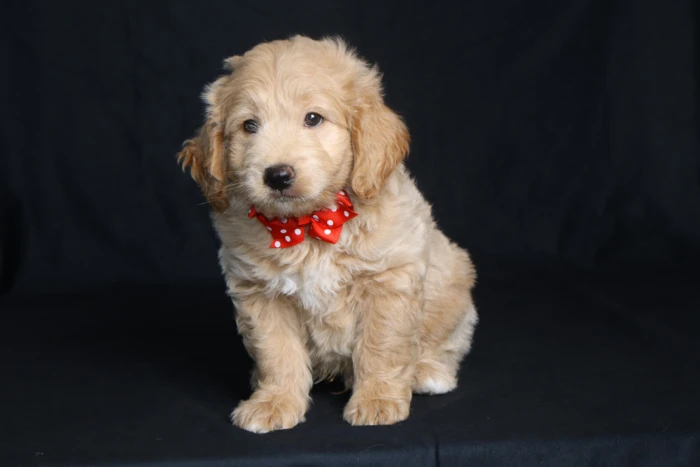
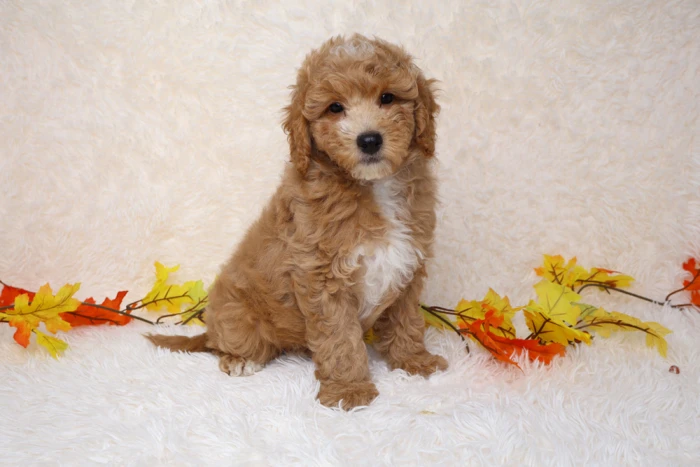
A:Standard Goldendoodle coats vary by F-generation, with size staying the same across all variations and only the coat type changing. F1 puppies come from a direct English Cream Golden Retriever and Standard Poodle pairing, and the coat comes out wavy with mild shedding through the year. F1b is a backcross to the Poodle, which produces a curlier, lower-shedding coat. F1bb adds another Poodle backcross on top of that and produces a fully hypoallergenic curly coat that works for households with allergies. Blue Diamond Family Pups currently breeds F1 and F1b variations. Two or three weekly brushings handle the wavy F1 coat. The curly F1b coat needs three or four weekly brushings to keep tangles from setting in around the ears, legs, and underbelly. A professional groomer trim every six to eight weeks keeps the coat tidy across both variations. Regular nail trims, ear cleaning, and dental care fill out the rest of the grooming routine.
Q:Is a Standard Goldendoodle a good match for life in Seattle?
A:A Standard Goldendoodle fits Seattle, WA city life with the wet-weather routine in place. The breed's calm family-bonded temperament settles into apartment and condo living, with a towel at the entryway and regular brushing keeping the wavy or curly coat manageable through rainy weeks. Mild winters and cool summers open year-round city walks. The trail at Schmitz Preserve Park Trail, 5551 SW Admiral Way, Seattle fits longer outings through most weeks of the year. Early socialization in puppyhood builds the confident adult.
Q:What health testing does Blue Diamond Family Pups do on Standard Goldendoodle parent dogs?
A:Every Standard Goldendoodle parent dog at Blue Diamond Family Pups goes through health and genetic testing before any pairing happens. Testing covers genetic conditions known in both English Cream Golden Retrievers and Standard Poodles, the two parent breeds in the cross. We look at structure, temperament, and overall build during the selection process since these traits pass through generations. Each Standard Goldendoodle puppy heads home with a one-year health guarantee covering genetic and congenital conditions. Our vet examines every litter before any puppy leaves the farm. Puppies head home fully vaccinated, dewormed on schedule, and microchipped.
Q:How does Blue Diamond Family Pups deliver Standard Goldendoodle puppies to Seattle?
A:Seattle, WA city families exploring Standard Goldendoodle puppies for sale have three Blue Diamond Family Pups delivery routes available. Option one is climate-controlled ground transport from our Sugarcreek farm in Eastern Ohio, with door-to-door city delivery. The second option has the puppy flying in-cabin to your closest airport accompanied by a professional flight nanny. Farm pickup by scheduled appointment rounds out the third route. Ground transit runs $300 to $500 depending on distance from Holmes County.
Q:What is Early Neurological Stimulation and why does Blue Diamond Family Pups use it?
A:Early Neurological Stimulation is a set of gentle handling exercises we do with each puppy from day three through day sixteen. This is the developmental window when the nervous system is still forming. The protocol came out of the US Military's working dog programs in the 1970s, and research has built on the original findings in the decades since. ENS puppies tend to handle stress more calmly and show stronger cardiovascular response than puppies who skipped it. Some of the early research also pointed to better immune function. Every Standard Goldendoodle puppy raised at Blue Diamond Family Pups goes through the ENS protocol. ENS puppies tend to react less to new sights and sounds in general, which keeps the first weeks at home calmer for everyone. With a loving, family-bonded breed like the Standard Goldendoodle, that calmer start helps the bond with the new family come together fast. Ongoing socialization through the puppy weeks still matters, with ENS giving that work a stronger foundation to build on. The protocol is part of why Blue Diamond puppies tend to settle into new homes quickly.
Q:How long do Standard Goldendoodles live?
A:Standard Goldendoodles typically live ten to fifteen years with consistent care. Standard medium-to-large breed care covers most of the picture, with regular veterinary visits, dental cleanings, and daily activity at the 60 to 90 minute range. The hybrid vigor from the English Cream Golden Retriever and Standard Poodle cross helps the breed sit on the higher end of typical longevity for the size. The mild Seattle city climate supports year-round outdoor exercise the breed benefits from. Blue Diamond's one-year health guarantee covers genetic conditions, and our health-tested parent dogs build longevity into the line.
Q:Does a Standard Goldendoodle have any breed-specific weather care needs?
A:Standard Goldendoodles handle a four-season climate well at 50 to 90 pounds, with a few simple habits covering the year. The breed has a normal muzzle and cools well, unlike short-faced breeds, so heat is rarely a real problem given a sensible summer schedule. On hot summer days, walks shift to cool mornings and evenings with AC time covering the peak afternoon hours. Pavement gets a quick palm check before stepping out, since hot asphalt burns paw pads fast. A water bottle along on longer outings handles hydration. In cold winter weather, a doggy coat helps on the bitterest mornings even at adult size. Paw wipes at the door clear any snow or sidewalk salt that comes home from walks. The wavy or curly coat handles cold reasonably well across F1 and F1b variations. Spring and fall are easy seasons with flexible walks across most weeks. None of this is complicated, and most owners settle into the seasonal rhythm fast.
Q:Can I visit Blue Diamond Family Pups before committing to a Standard Goldendoodle puppy?
A:Visits to our Sugarcreek farm run by appointment only. Send us a message and we'll find a time that works. Our 10-acre working family farm is in Holmes County, Eastern Ohio. During a visit you'll see our kennel, walk the outdoor play areas, and meet the adult dogs and current litters. You'll also meet our family of seven, including Dean, Esther, and our five children, who all help handle every puppy from birth through go-home day. Seattle families who want a visit before picking a puppy can reach out to schedule one. If the drive isn't workable for your family, we can do video calls and send extra photos and videos of any puppy you are considering.
Q:What makes Blue Diamond Family Pups different from other Standard Goldendoodle breeders?
A:A few things define how we work at Blue Diamond Family Pups. We have raised Standard Goldendoodles for over eight years on our 10-acre family farm in Sugarcreek, Eastern Ohio. Every parent dog is health and genetic tested before any pairing. Two variations, F1 and F1b, give families a real choice in coat type while the breed size stays the same. Each puppy goes through Early Neurological Stimulation from day three to day sixteen, and our family of seven handles every puppy from birth onward. Kimberly, our professional puppy trainer, runs temperament testing and writes the individual description that helps match each puppy to the right family. Each puppy leaves with a one-year health guarantee, fully vaccinated, dewormed, and microchipped. Delivery is available across the country.