
Cavapoo puppies at Blue Diamond start life differently than most. A puppy trainer evaluates each dog individually, writes a full personality profile, and matches each pup to the right family based on documented temperament data. F1 and F1b generations. Starting at $2,995.
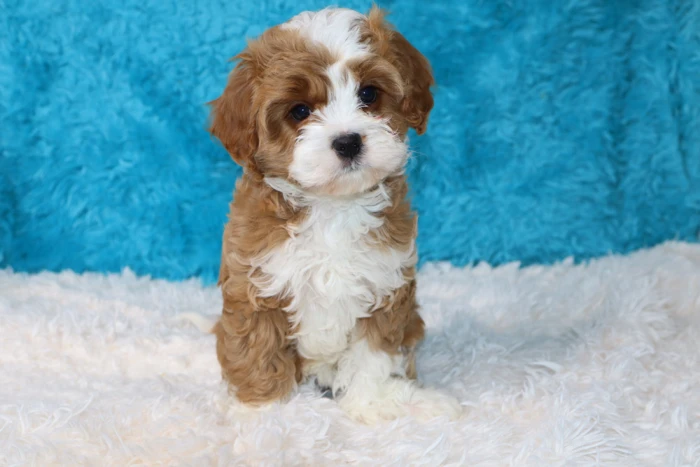
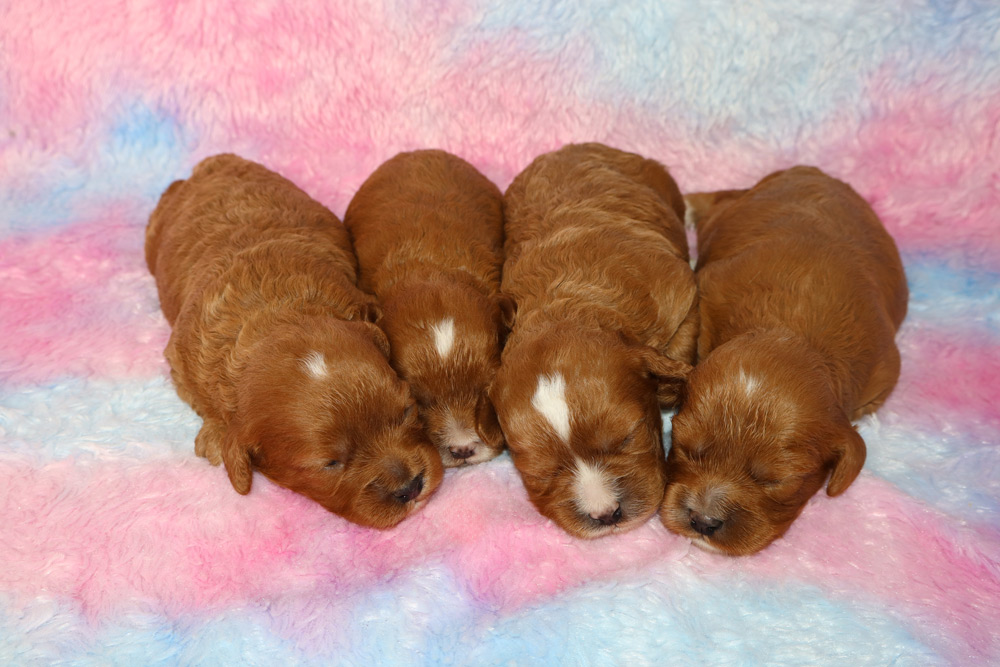
10/15/2026
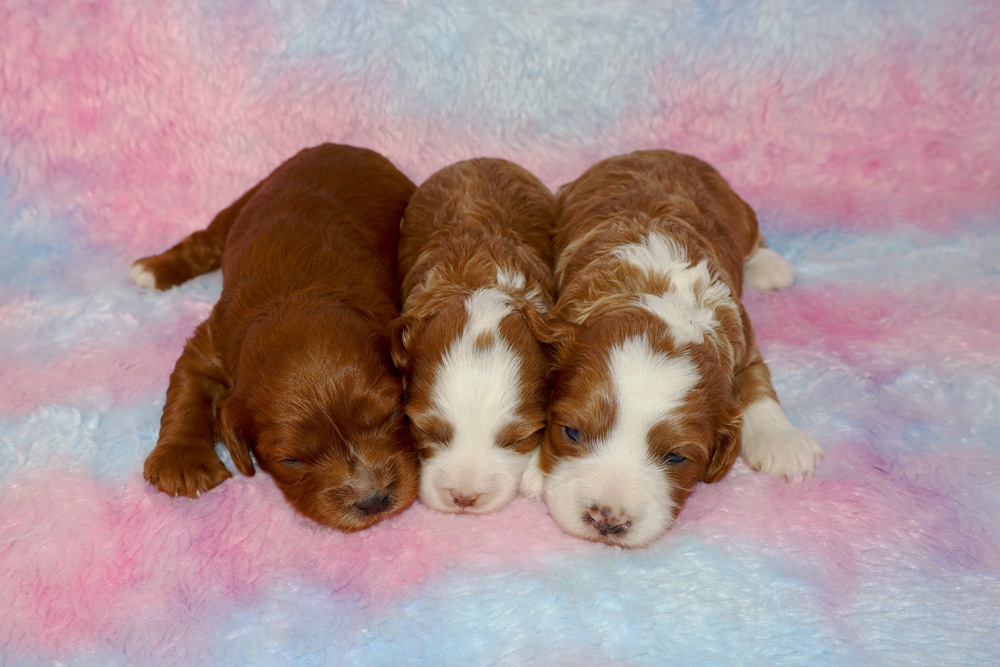
10/16/2026
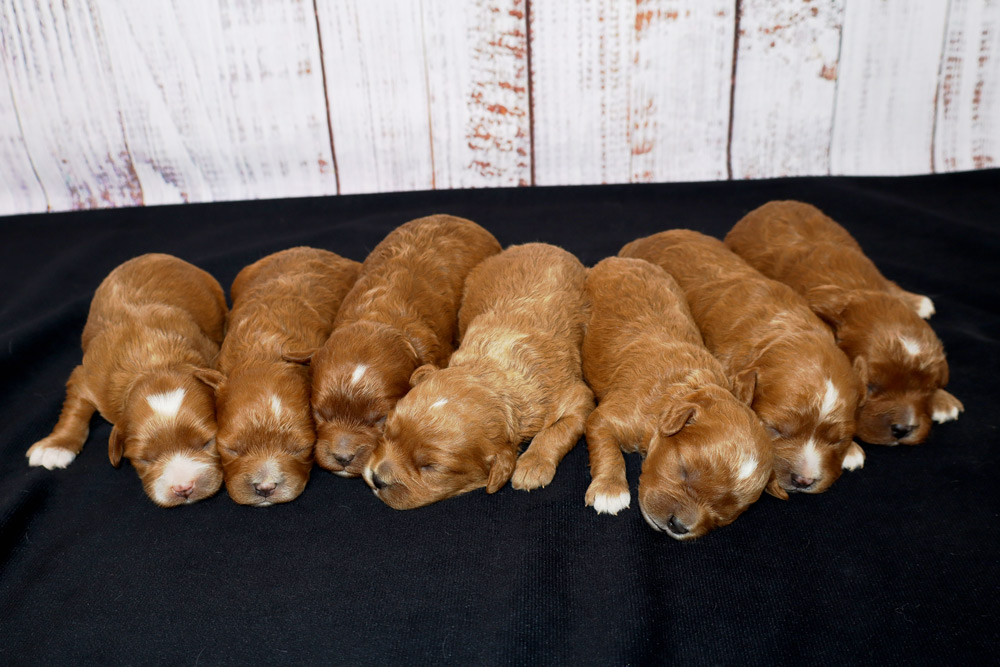
09/23/2026
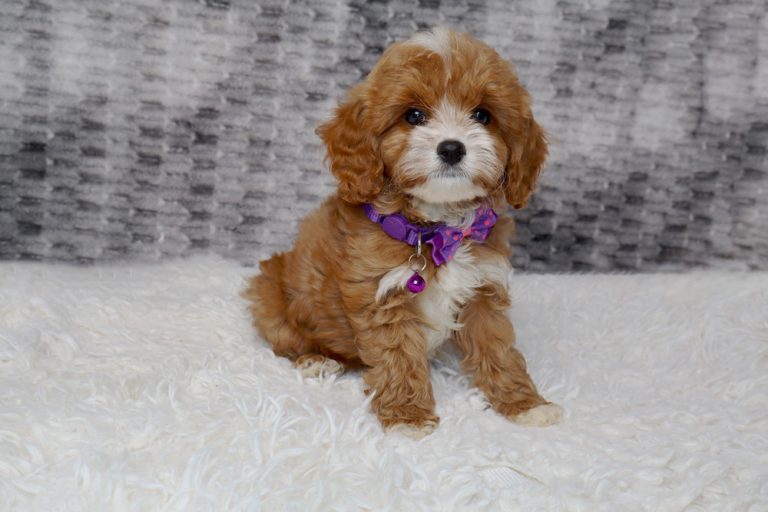
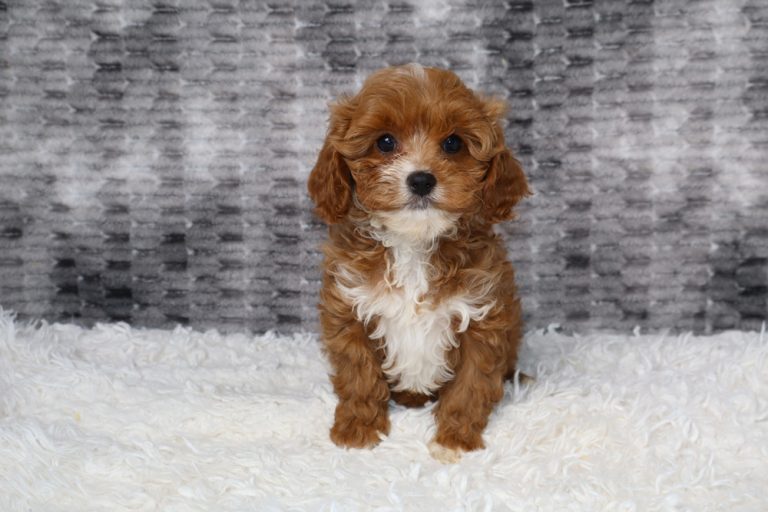
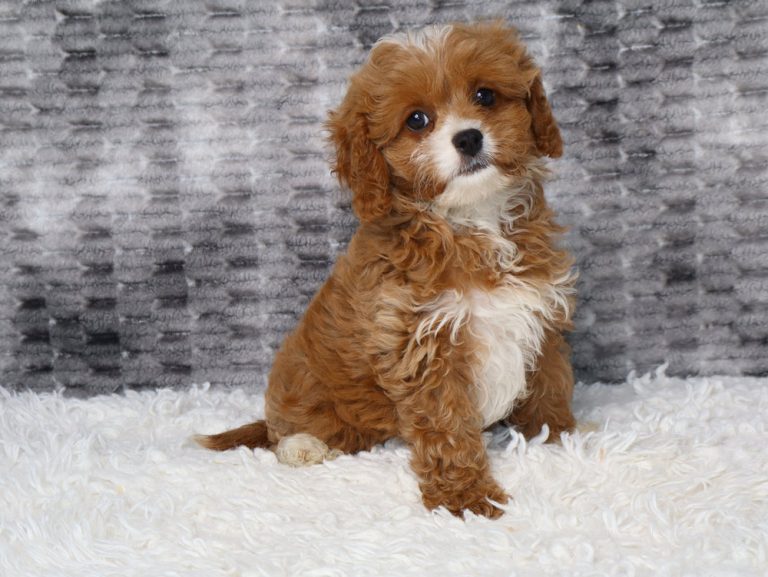
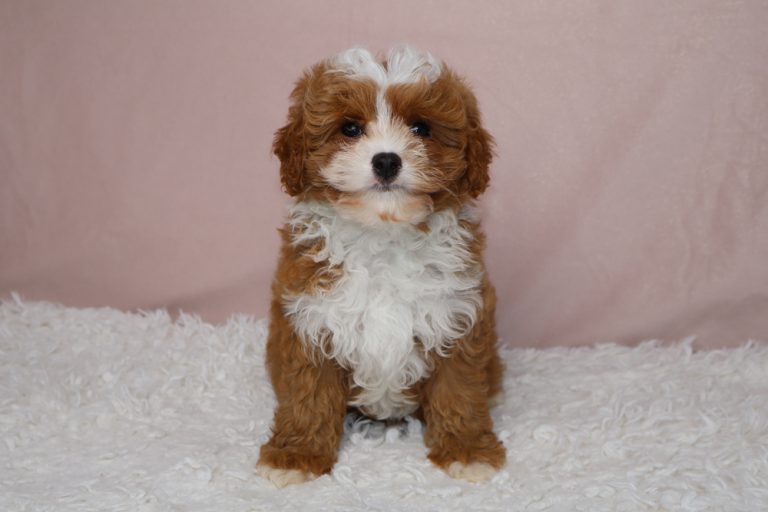
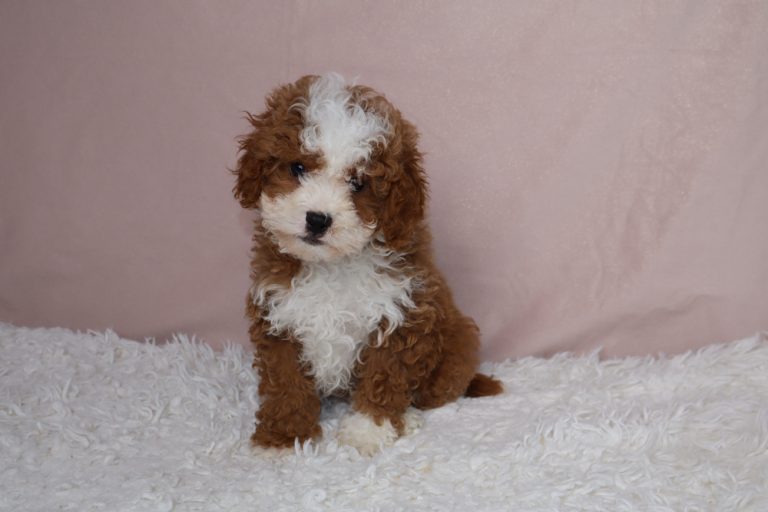
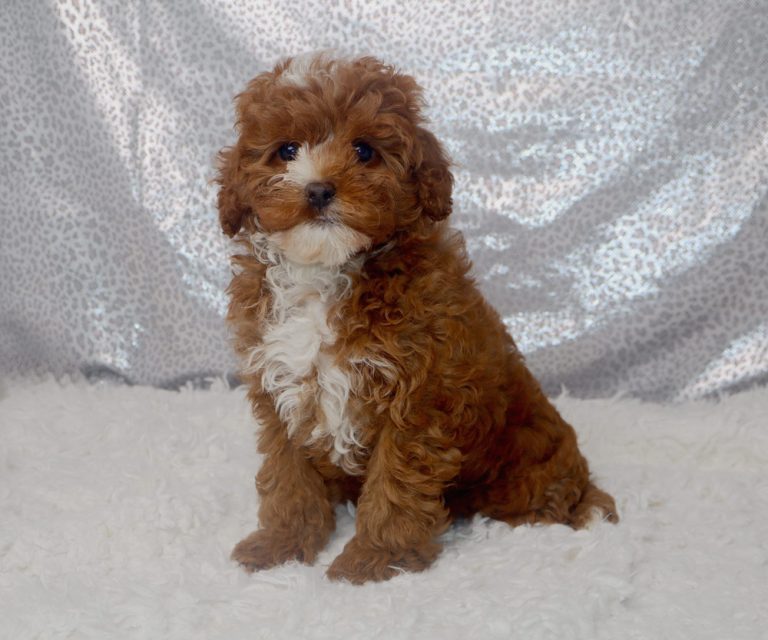
A Cavapoo is a hybrid of the Cavalier King Charles Spaniel breed and the Miniature or Toy Poodle. The breed first appeared in Australia in the late 1990s, with breeders pairing the Cavalier’s gentle, affectionate nature with the Poodle’s intelligence and low-shedding coat. Cavapoos are among the most consistently people-oriented dogs in the designer breed category, and their low-shedding coats make them a workable choice for families with mild dog allergies.
Blue Diamond raises both F1 and F1b Cavapoos. The generation affects coat type, shedding level, and the extent to which Poodle energy comes through in the dog’s personality. These two breeds produce a dog that bonds deeply with its family, adapts well to apartment or house living, and does not need hours of outdoor exercise to stay content.
| Adult weight | 12 to 20 lbs |
| Height at shoulder | 9 to 12 inches |
| Lifespan | 12 to 15 years |
| Generation at Blue Diamond | F1 and F1b |
| Shedding | Minimal (F1) to none (F1b) |
| Coat | Wavy (F1) to curly (F1b) |
| Hypoallergenic | Semi (F1) to yes (F1b) |
Cavapoos sit in the medium-energy range, with a clear preference for being near their people over burning energy alone. They do well with 30 to 45 minutes of daily exercise. A morning walk and afternoon play session covers most of what an adult Cavapoo needs physically, and mental stimulation through training and puzzle toys handles the rest.
The generation label tells you the breeding makeup of the dog, which predicts the coat type, shedding level, and how much Poodle influence comes through in energy and trainability.
An F1 Cavapoo has one purebred Cavalier King Charles Spaniel parent and one purebred Miniature or Toy Poodle parent. That makes the dog exactly 50% of each breed. F1 Cavapoos land in the wavy coat range most often, shed minimally, and are considered semi-hypoallergenic. The Cavalier temperament comes through strongly at 50%, which gives F1 Cavapoos their famously calm, sweet-natured personality. They’re the generation most likely to settle into a home with very low drama.
An F1b Cavapoo has one F1 Cavapoo parent and one purebred Poodle parent, shifting the genetics to approximately 75% Poodle and 25% Cavalier. The coat trends curlier and sheds less, making F1b Cavapoos a better fit for families with more serious allergy concerns. The extra Poodle genetics also bring slightly more energy and a higher need for mental stimulation.
Both generations are affectionate, trainable, and well-suited to family life. The choice usually comes down to allergy sensitivity and how much grooming time a family is willing to commit to. F1b coats need brushing more often and grooming appointments on a tighter schedule than F1 coats.
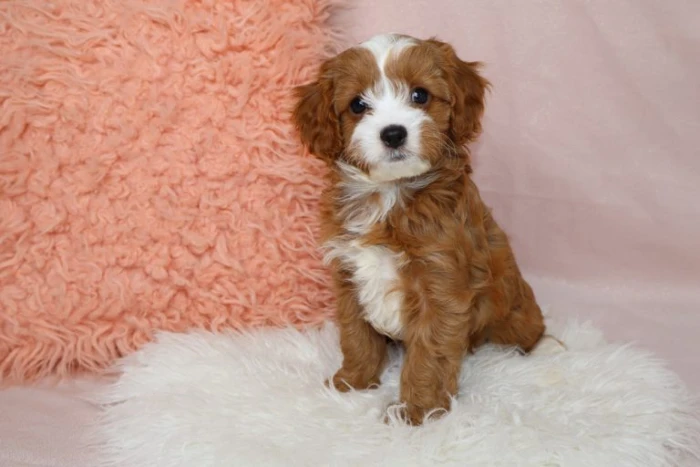
Cavapoos are gentle, affectionate, and deeply bonded to their people. The Cavalier side of their genetics contributes a calm, almost intuitive connection to human emotion. A rough day at home and your Cavapoo will be next to you. A playful afternoon and they’ll match that energy. That emotional attunement is one of the qualities that makes Cavapoos so sought after for therapy and emotional support work.
They do best in households where someone is home most of the day. Separation anxiety is a real tendency in the breed, not a myth. Cavapoos that spend long hours alone without a plan for that time are more likely to develop stress-related behaviors, such as excessive barking or destructive chewing. Early training that builds comfort with being alone, starting in the first weeks at home, reduces this risk considerably
With children, Cavapoos are patient and gentle. Their small size means very young children should be supervised during play. An excited 15-pound dog can still startle or knock a toddler. The breed itself is not prone to snapping or aggression, and families with kids who’ve learned how to handle dogs appropriately describe Cavapoos as nearly ideal companions.
Other pets are rarely a problem. Cavapoos that are introduced to cats and other dogs early tend to get along better. The Cavalier temperament is not territorial. The Poodle side adds social intelligence rather than aggression.
This breed is easy to train. Both parent breeds rank high for intelligence and willingness to please, and Cavapoos inherit both traits. Short, positive sessions work best. Ten to fifteen minutes twice a day, with varied drills, produces a well-trained dog faster than one long block. The Poodle side picks up commands fast and also gets bored fast with repetition, so keeping the session moving matters.
Adult Cavapoos at Blue Diamond run between 12 and 20 pounds and stand 9 to 12 inches at the shoulder. Their size is dependent on the size of the Poodle parent, whether Miniature or Toy, which plays the largest role in where a specific puppy lands within that range. Blue Diamond provides a size estimate for each litter based on the dam and sire weights.
| Age | Estimated weight range |
|---|---|
| 8 weeks (go-home age) | 2 to 4 lbs |
| 3 months | 4 to 8 lbs |
| 6 months | 8 to 14 lbs |
| 12 months | 11 to 18 lbs |
| Full grown (12 to 18 months) | 12 to 20 lbs |
Cavapoos reach full height around 12 months and finish filling out in body weight by 18 months. A 24-inch crate fits most adults comfortably. Their size makes them genuinely apartment-friendly, not just manageable in an apartment. A well-exercised Cavapoo is content in a smaller living space because they spend most of their time near their person rather than roaming independently.
Cavapoos have two distinct coat types, depending on generation. F1 Cavapoos tend to have a soft, wavy coat that reflects a balance of both parent breeds. F1b Cavapoos have a curlier coat because of the stronger Poodle breed. Both shed very little, but the F1b coat holds loose hair more tightly and releases less dander, which is why families with allergies choose it more often. The tradeoff is grooming effort: curlier coats mat faster and need more frequent brushing and professional attention.
Cavapoos come in many colors drawn from both parent breeds:
Full descriptions and photos go live on the website with each puppy’s listing at 7 weeks old.
Cavapoos benefit from hybrid vigor, the tendency of first-generation crosses to be healthier than either purebred parent. Cavalier King Charles Spaniels carry a number of breed-specific conditions that cross-breeding reduces in prevalence. That reduction is not a guarantee, which is why pre-pairing parent health testing is the foundation of responsible Cavapoo breeding. Every Blue Diamond breeding dog undergoes genetic health testing before entering the program.
Mitral valve disease is the most important health consideration in any Cavapoo breeding program. MVD is known to be the leading cause of death in Cavalier King Charles Spaniels, with nearly all Cavaliers developing the condition by age ten. The disease involves the mitral valve of the heart deteriorating over time. This condition causes blood to leak backward rather than move forward. This eventually leads to congestive heart failure. Crossbreeding with Poodles reduces the prevalence compared to purebred Cavaliers, but it doesn’t eliminate the risk entirely. Responsible breeders cardiac-screen Cavalier parents before breeding. Annual vet checkups that include a cardiac listen are the way to catch early signs.
Syringomyelia is a neurological condition more common in Cavaliers than in most other breeds. It occurs when the skull is too small for the brain. These conditions lead to fluid buildup in cavities along the spinal cord near the brain. Affected dogs often show sensitivity around the neck, phantom scratching at the air, and progressive pain. The condition is difficult to detect without an MRI. Responsible breeding practices and selecting Cavalier parent dogs without a family history of the condition reduce the odds of producing affected puppies.
Progressive retinal atrophy is a known inherited eye condition present in both Poodles and Cavalier King Charles Spaniels. It causes gradual vision loss over time and eventually leads to blindness. Genetic testing of parent dogs before pairing identifies carriers and prevents the production of affected puppies. Every Blue Diamond breeding dog is tested for PRA.
Patellar luxation occurs when the dog’s kneecap slips out of its normal position, a common concern in small breeds. Mild cases cause occasional skipping or bunny-hopping after vigorous activity. Severe cases need surgical correction. Maintaining a healthy body weight for your puppy helps reduce stress on their joints. Genetic screening of parent dogs addresses the inherited component of the risk.
Cavapoos inherit floppy ears from the Cavalier side, and those ears trap moisture more readily than upright-eared breeds. That moisture creates the possibility for yeast and bacterial infections. Checking ears weekly and cleaning with a vet-approved solution when needed are the most effective preventive measures. Some things to watch for include head shaking, ear scratching, redness inside the ear canal, and any unusual odor.
Small breeds have more teeth in a proportionally smaller jaw. Because of this it can cause crowding and increase the risk of periodontal disease earlier than in larger dogs. Daily tooth brushing slows plaque buildup. Dental chews between brushings help. A veterinary dental cleaning on the schedule your vet recommends catches problems before they become painful or require extractions.
Every Blue Diamond puppy goes home with a veterinary health certificate, age-appropriate vaccinations, a deworming record, and documentation of parent health testing. Blue Diamond’s health guarantee covers genetic health conditions for one year from the date of purchase.
Blue Diamond Cavapoo puppies don’t go through a standard whelping-box-to-go-home process. What happens between birth and 8 weeks determines how a puppy handles its first week in a new home. The months that follow depend on it too.
ENS starts at day 3 and runs through day 16. Each puppy receives five specific handling exercises once per day during this window: tactile stimulation, thermal stimulation, head-up positioning, head-down positioning, and supine positioning. The research behind ENS, originally developed for military working dogs, shows that mild stimulation during the early neurological development window produces dogs with stronger cardiovascular systems, improved stress tolerance, and greater adaptability to new environments. A Cavapoo that’s been through ENS handles its first car ride, first vet visit, and first week in a new home with more confidence than one that hasn’t.
Kimberly, Blue Diamond’s independent puppy trainer, evaluates every puppy at 7 weeks. She assesses each dog individually across multiple temperament dimensions, including energy level, response to handling, reaction to new people and other dogs, and comfort with being held. She writes a full personality description for each puppy. That report goes live on the website alongside the puppy’s listing. Families choosing a Cavapoo from Blue Diamond don’t get a generic breed description. They get a profile of the specific dog they’re considering.
Between ENS and Kimberly’s evaluation, each puppy spends weeks being handled by multiple people, exposed to household sounds, moved through different environments, and socialized with other dogs. By go-home day, these aren’t puppies that have only ever seen the inside of one room.
Available puppies post on this page as soon as Kimberly completes temperament testing at 7 weeks. Sign up for the newsletter to get notified the moment a new litter goes live. Cavapoo litters fill quickly once listings go up.
Puppies with a price listed are available now. Clicking Details on any listing opens Kimberly’s full temperament profile, covering the puppy’s energy level, how it responds to new people and other dogs, and what training approach she recommends for that specific animal. Reserving a puppy requires a deposit. Klarna is available at checkout for families who want to split the purchase over time. Credit card payments are preferred for deposits. Cash or card for full payments.
Puppies go home at 8 weeks. No puppy leaves before that point, regardless of family request or scheduling preference. When a puppy reaches its 8-week developmental window, it is ready to separate from its litter. It is also the best time to begin building strong bonds with their new family. Eight weeks is our standard and we don’t make exceptions. Blue Diamond connects families living farther away with vetted transporters who safely deliver the puppies. Your puppy leaves with a health certificate, full vaccination record and their deworming documentation. Also, Kimberly’s written temperament profile along with the litter’s parent health testing paperwork.
Adult Cavapoos only need 30 to 45 minutes of daily exercise. Taking the pup on a morning walk and an afternoon play session is all that is needed. Cavapoos are not highly active dogs, and they don’t need long runs to be satisfied. What they need is consistent daily movement paired with mental engagement. Without one or the other, boredom sets in quickly and often shows up as barking or chewing.
Puppies need far less planned exercise than adults. A common guideline for small-breed puppies is 5 minutes of leash walking per month of age, twice per day. This helps to protect developing joints. Skip the long runs and jumping until the dog is at least 12 months old.
F1 Cavapoos need brushing two to three times per week and a professional grooming appointment every 10 to 12 weeks. Their wavy coats are lower-maintenance than the F1b, but they still mat without regular attention, particularly behind the ears and under the legs where friction is highest.
F1b Cavapoos need brushing three to four times per week and a professional grooming appointment every 6 to 8 weeks. The curlier coat holds loose hair rather than shedding it, which is good for allergy sufferers but means those tangles have nowhere to go unless you brush them out. Daily brushing is better for F1b coats. Using a slicker brush in combination with a metal comb is the two tools that work well. We recommend you introduce brushing during the first week at home. This also helps them tolerate being groomed far better as adults.
Ear care is required for this breed. Floppy ears trap moisture, creating ideal conditions for infection. Check ears weekly. Clean with a vet-approved solution when you notice wax buildup or any mild odor. If you notice redness in your puppy’s ears this could be a serious condition that requires a vet visit.
Cavapoo puppies need a high-quality small-breed dog food. Small-breed puppy food supports healthy growth and appropriate calorie intake. After 12 months your dog can be transitioned to a small-breed adult dog food. We recommend you feed your adult dog two meals per day. A 15-pound adult Cavapoo eats approximately 1/2 to 3/4 cup of dry food daily, depending on the formula’s caloric density. Check the feeding guide on your specific food and adjust based on body condition. Cavapoos are prone to weight gain if portion sizes are not monitored, and excess weight can put stress on the dog’s small joints.
Cavapoos are among the easier breeds to train. The Poodle’s intelligence and the Cavalier’s desire to please combine to create a dog that learns commands quickly and genuinely enjoys the training session. Short sessions beat long ones. Ten to fifteen minutes twice a day, with varied drills and positive reinforcement, works well for this breed. Training should begin on the first day home.
Cavapoos are known for their separation anxiety. So prevention should begin in the first week. Leave the puppy alone for short periods, gradually increasing duration over several weeks. Crate training helps because it gives the dog a defined, safe space rather than the run of a home that feels too large when you’re not in it.
Posted on Google
 Mel T.September 8, 2026
 Finn ( Asher ) is a F1 B cavapoo. ( zero shedding he can be in my lap in all black and get off me with two dog hairs on my clothes ) He’s right at three months old. He has been a complete joy. He is super smart. I take him everywhere. He is the talk of the town. So many people will come up to us out in public. I have actually referred this breeder multiple times to people. There are so many scams out there. Also, the delivery process was first class. I knew about this breeder because a friend of mine had gotten a dog from them top-notch.Posted on Google
 Richard SermonsSeptember 5, 2026My wife and I have never ordered a dog online before so we were a little worried about the process. Blue Diamond Family Pups made the process very easy, they answered all our questions and kept us up to date with the delivery. They were very professional and We would highly recommend them for you ur puppy purchase. We received Roper on Thursday morning and a day and a half later he has settled in here in his new Louisiana back yard. Thank You Blue Diamond Family Pups.Posted on Google
 JohnSeptember 4, 2026Very Professional and clean beautiful puppysPosted on Google
 Carolina AcevesAugust 28, 2026So happy with our experience finding our Bernese Mountain Dog. We got our puppy in March and had a seamless experience. He is a happy, loving healthy puppy.Posted on Google
 Kiara PeñaAugust 16, 2026We had a wonderful experience with Blue Family Diamond Pups (Dean and Heidi)! We found them through Reddit threads and Facebook groups when searching best bernedoodle breeders with great reviews. They responded to our email and text inquiries within hours and answered all of our questions. We purchased a 9-week-old F1 Standard Bernedoodle and had him transported from Ohio to Miami. On their website they share videos of their 10-acre farm and facility, a tour of the third-party pet transport vehicle, and provided all of his documents and paperwork. We’re so happy with our puppy and would absolutely recommend Blue Family Diamond Pups! 🐶❤️Posted on Google
 Erin ScarpaceJuly 18, 2026we got spirit from you in November. She was3 months and a micro bernedoodle. She has been amazing. Her demeanor is so great. So many people have asked about your company and the breed because of her. Her colorings are amazing and everyone comments on it. She has been the sweetest best pup for our family. I hope more families find you all. Thanks again for an amazing dog.Posted on Google
 Kim CassettiJune 17, 2026We are so happy with Blue Diamond Family Pups! They were so responsive and helpful with all of my questions. We had our wonderful puppy shipped from Ohio to California. It all worked out so well! Incredibly grateful for Blue Diamond !!! Highly recommend!!!Posted on Google
 Richard ArthurMay 19, 2026There are no signs or markings identifying Blur Diamond, but Google maps got is to the front door.Posted on Google
 Justin EnnisMay 7, 2026We recently got a mini Bernedoodle named Drake from Blue Diamond Family Pups and had a great experience. We were nervous about buying a dog online and having him shipped, but the positive reviews gave us confidence — and it worked out perfectly. Drake has an incredible temperament, is great with our kids, and has been an awesome addition to our family. Highly recommend!Posted on Google
 Katherine WaltenMay 5, 2026After being scammed prior to finding Blue Diamond Family Pups, we cannot praise these folks enough. They worked with us due to our previous experience with scammers and we are forever grateful. We have a story to share: We have a show in Vegas. Daphne came to the Vegas theater with us the first evening since we had a show the day she arrived. She did fabulously. During our show, she started crying and howling just a little bit, but the audience could hear her. So my husband told them about her arrival. They started chanting to bring her on stage, so she made her stage debute on the first day with us! The audience left and we were just standing at the entrance door talking when some audience members returned and my husband thought they came back to see him. They said, no, we want to see Daphne!! 😆 On night 1 she was totally adjusted and is already a theater doggy!! On day 2, she was in a café with us! She is amazing and very smart! The nurturing and care provided by Blue Diamond Family Pups prior to delivery is a testiment to the care they provide the pups. Daphne is well adjusted, happy, content and very easy to train. If you are considering a pup from this place, do it. You will be so glad you did.Posted on Google
 Jim BeallMay 2, 2026These people are the " real deal". They worked with me through my apprehension about buying on-line. I got the love my life( a female standard Bernedoodle). A Great dog, from good people, for a far price. They are worth your trust!Posted on Google
 Brooke RosierMay 1, 2026We adopted Dahlia (now named Birdie) and couldn’t be more in love. It was our first time getting a puppy online without meeting the breeder in person which was a bit nerve wracking but the team at Blue Diamond Puppies was very communicative and thorough, and clearly she had been well taken care of prior to her arrival. Our puppy is happy, healthy, gorgeous and very sweet. Thank you so much Blue Diamond!Posted on Google
 Pam BohannonMarch 23, 2026My puppy arrives on time and has been a great dog. The training at the Blue Diamond family Pups was a wonderful experience he is so friendly and social with other dogs and people. I highly recommend this organization to anyone who is looking.Posted on Google
 Jami McMullenMarch 21, 2026This is Autumn aka Auty! She is a Cavapoo. Her birth name was Patience. I have the most sweetest prettiest pup ever!! She is so funny and intelligent! Auty brings sooo much joy to our little family. The process of purchasing my pup was sooo easy! Everything went smoothly. Thank you Blue Diamond 💎Posted on Google
 Syl NisleyMarch 17, 2026Just a great place to buy your next puppy friend. Awesome peoplePosted on Google
 Sam TostiMarch 16, 2026Blue Diamond Family Pups exceeded every expectation. From helping us receive our puppy seamlessly, to letting us know what to expect and how to prepare, and most importantly for our new puppy. She arrived in perfect health, well groomed and taken care of, and her personality is spot on with her assessment. We are so lucky to have found them!Posted on Google
 Nicole ThammavongMarch 14, 2026Our cavapoo Peaches (formerly Bella) is over a year old now and has been an absolute dream! She loves to explore with her humans and never barks. She does well other dogs and people and has a perfect bill of health, also smart and easy to train. We had such an easy an experience with Blue Diamond and received regular updates about our baby before she arrived. Highly recommend :)Posted on Google
 Aileen PerezJanuary 21, 2026Blue Diamond Family Pups is absolutely wonderful! Their puppies are beautiful, healthy, and truly amazing. They were incredibly knowledgeable, responsive, helpful, and kind throughout the entire process and were also very flexible. I couldn’t have asked for a better experience! We are so happy with our girl!!! Highly Recommend. 🐾♥️Posted on Google
 Paul HunterJanuary 16, 2026Everything about my experience with Blue Diamond Family Pups has been amazing!! Their website is great! Communication with the owners was perfect. I felt like Maverick had been well cared for. They gave me all the info I needed to start a great relationship with Maverick. Obviously Maverick The perfect puppy!Posted on Google
 Sam EshJanuary 12, 2026If you buy a puppy from Blue Diamond your buying a top notch healthy puppy, very very happy experience with blue diamond ! And the great service they offer as well !
Browse the litters posted above or sign up for the newsletter to get notified the moment new puppies become available. Blue Diamond Cavapoo litters fill quickly once Kimberly’s temperament reports go live.
Starting at $2,995. Reach Blue Diamond through the contact page with any questions before reserving.